
A whole shop, in one click
Pick a recipe — a corner grocer, a fashion boutique, a garden centre — and StoreSeeder fills nine resources in dependency order, so nothing points at nothing.
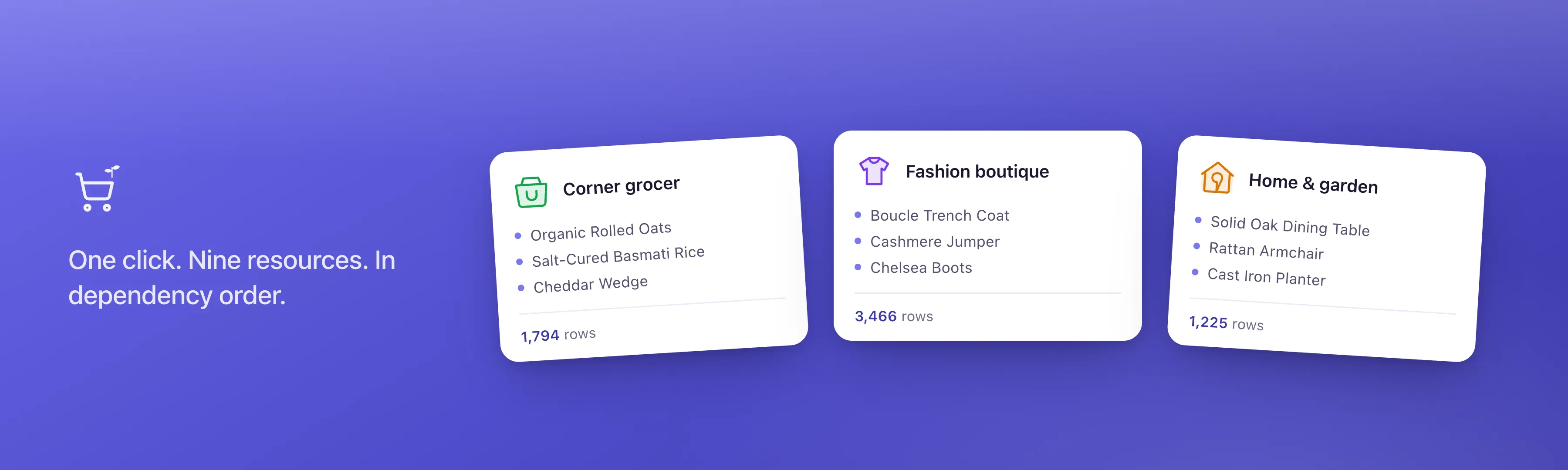
A whole shop, in one click
Pick a recipe — a corner grocer, a fashion boutique, a garden centre — and StoreSeeder fills nine resources in dependency order, so nothing points at nothing.
Or one resource at a time
Twenty-one generators, each with a live preview and parameters that reach the output. Narrow a price range and the preview narrows with it.
Whichever store you run
WooCommerce and Fluent Cart ship. Every record goes through that platform’s own models — not direct database writes — so it respects the same schema, validation and money handling as real data.
Removable, exactly
Every row is recorded in StoreSeeder’s own ledger, so deleting the test data removes what it created and nothing that merely resembles it. No date ranges, no name matching.
It supplies the words and numeric bands that make a grocer look like a grocer — product names, a category tree, brand names, a price band, variation axes. The generators still build every row.
That is why a fixed seed reproduces the same store on any platform, why money stays exact, and why a recipe cannot smuggle in a broken record: there are no records to smuggle.
Corner grocer
Cheap lines, high order counts, weight-based variations. 1,794 rows at Medium.
Fashion boutique
1,440 variations over 240 products — size × colour, two axes deep. 3,466 rows.
Home & garden
Shipping classes that genuinely differ, and the widest price band. 1,225 rows.
Every column a parameter governs comes from the same code the run uses. That sounds obvious and it is the part most test-data plugins get wrong: a control that moves, saves, and quietly changes nothing.
StoreSeeder writes large volumes of data directly into your store. It is a development tool: use it on development and staging sites, and back up before a large run.
No analytics, no licence check, no phone-home. The only outbound requests are two optional downloads from GitHub, each behind a consent prompt an administrator has to accept.